Visual Aids and Graphics
Note:
The images presented here serve purely as descriptive aids. The objects they represent are inherently abstract and cannot be easily visualized in conventional terms. Many of these illustrations are artistic interpretations, created solely to provide a conceptual glimpse into structures that exist within a purely informational and multidimensional framework.
Grid:
The structured grid within the Quantum Spatial Encoding Framework (QSE-F) that defines discrete q-steps for encoding and navigating information. Q-Grids serve as the foundational planar spaces for organizing sequences. Each dimension will introduce unique constructs, such as Q-Spirals in 2D, Q-Helixes in 3D, and Q-Hyperhelixes in 4D.
Click to expand the image
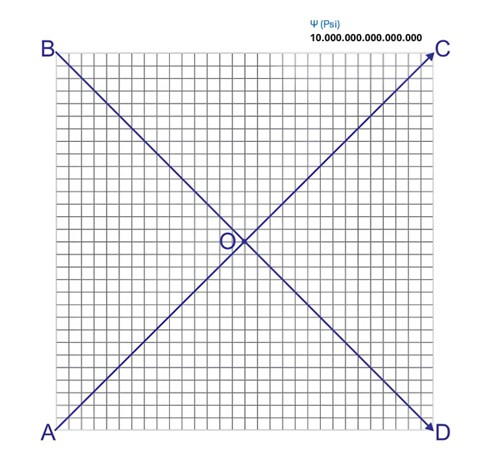
Abstract Layers:
Hierarchical encoding constructs within the planar aspect (Q-Dimension) of any R-Dimension. Abstract Layers extend the logical complexity of Q-Dimensions without introducing additional spatial depth.
Click to expand the image
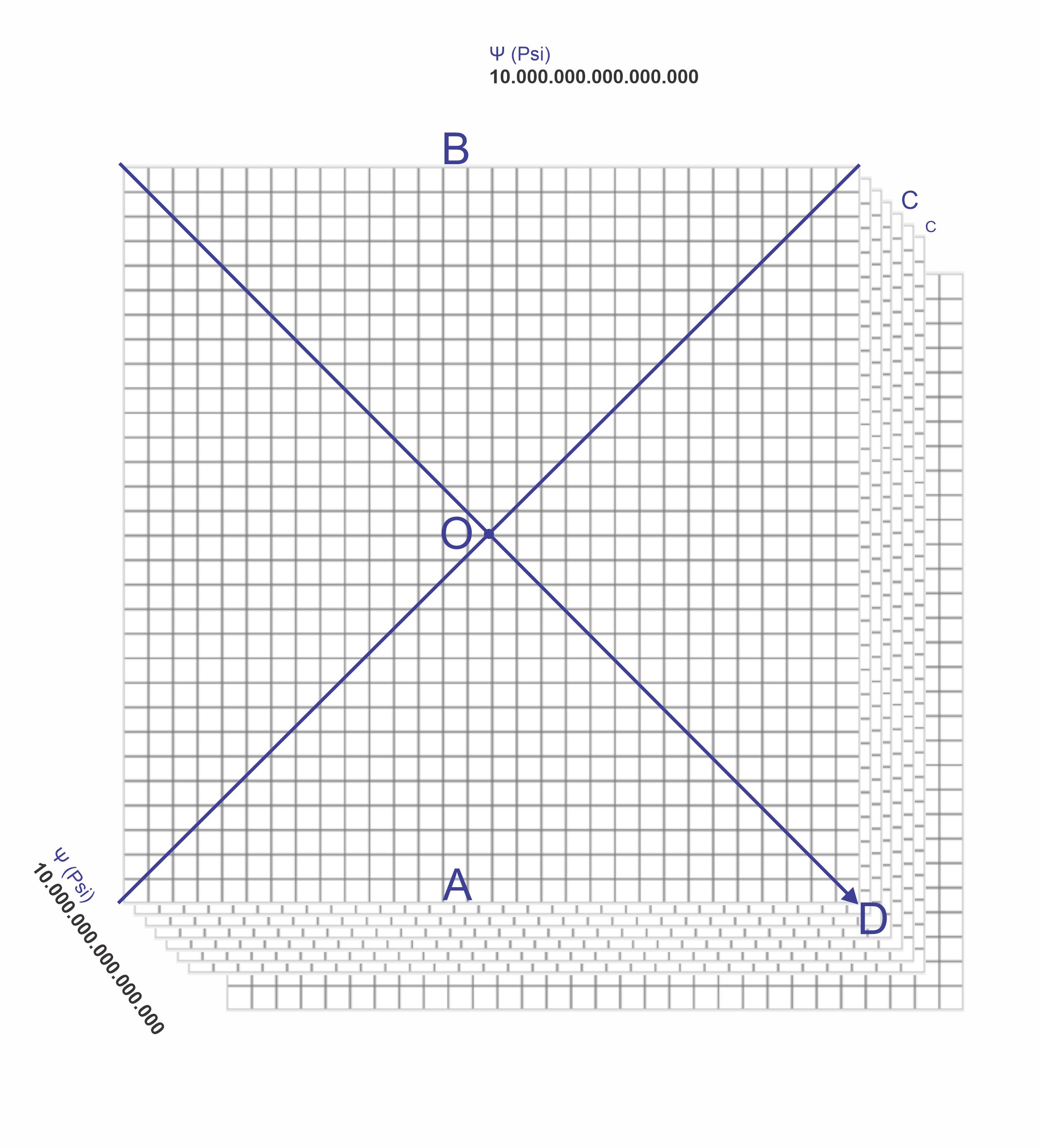
Hypergrid
In the Quantum Spatial Encoding Framework (QSE-F), the Hypergrid refers to a multi-dimensional, abstract information space where data is represented as structured addresses within a grid-like framework. Each point in this hypergrid corresponds to a unique address, allowing for deterministic navigation and encoding of information across various dimensions. This structure enables complex data relationships and supports the framework's principles of deterministic superposition and multi-dimensional encoding.
Click to expand the image
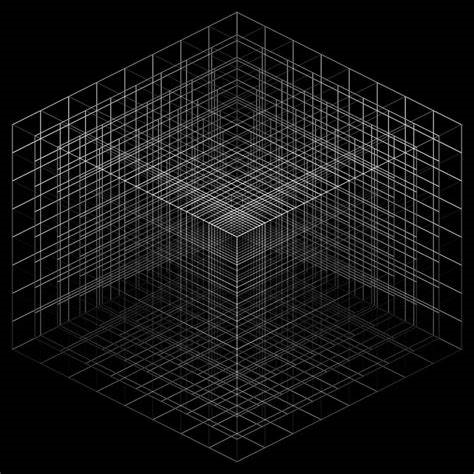
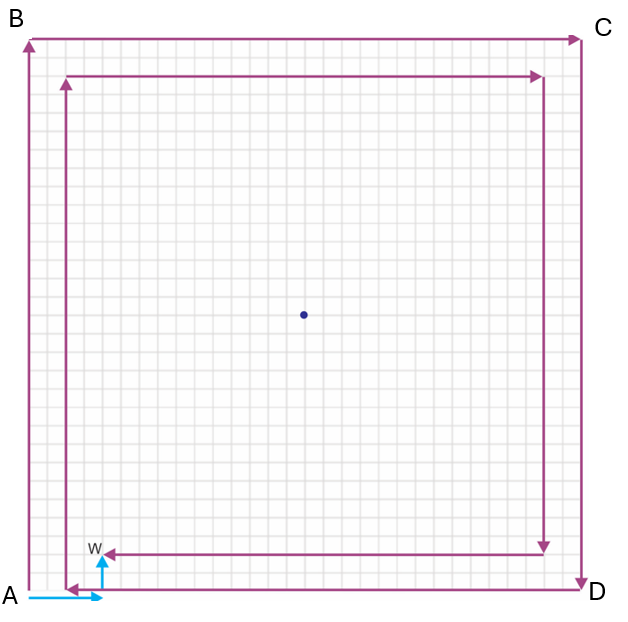
Spiral
A 2D construct within the Quantum Spatial Encoding Framework (QSE-F) that represents deterministic pathways of succession and precession through square q-steps on a Q-Grid. Q-Spirals encode sequences in a structured, planar format, forming the basis for higher-dimensional abstractions like Q-Helixes and Q-Hyperhelixes. In the example attached here, see the distance that A needs to go to reach w using the purple pattern, and compare to the distance A needs to go to reach w through the blue pathway.
Click to expand the image
Q-Twin Entity
A Q-Twin (QT) is the opposed structural entity that naturally emerges at any dimension in the QSE-F encoding process. It exists as a deterministically entangled counterpart, ensuring dimensional consistency and preserving reversibility during transformations. Q-Twins manifest as spirals forming squares in 2D, helices forming cubes in 3D, and hyperhelices forming hypercubes in higher dimensions. Only one half of the pair is needed to fully reconstruct the other.
Click to expand the image

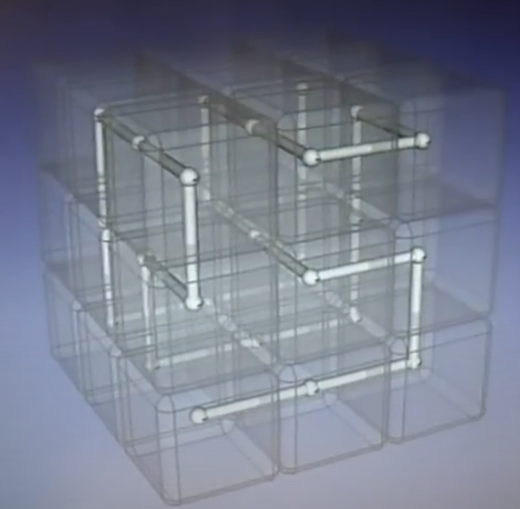
Helix
A 3D construct within the Quantum Spatial Encoding Framework (QSE-F) that extends the principles of the Q-Spiral into cubic q-steps. Q-Helixes encode deterministic pathways of succession and precession in three dimensions, serving as the foundation for encoding and navigating complex 3D information spaces.
Click to expand the image
Q and R-Dimensions:
Q and R-Dimensions represent the abstract expansion of the QSE-F model, structured entirely through q-units. They define the informational framework by extending across grids, hypergrids, and higher abstract levels, maintaining a discrete, addressable structure. The processing of Q-Dimensions remains uniform across all R-Dimensions, as they function purely through counting and addressing q-units.
Click to expand the image

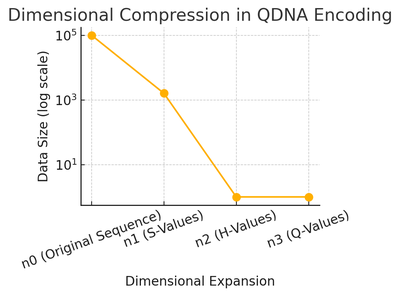
Dimensional Compression In QDNA Encoding:
As the transformation progresses through dimensions, the number of required coordinates reduces drastically.
Click to expand the image